
Our Story
Medgalia was founded around a simple observation: organizations generate vast amounts of biomedical data, yet turning that data into useful knowledge remains challenging. Fragmented systems, complex data, and evolving technologies can make analysis difficult and limit opportunities for reuse.
Medgalia brings together expertise in data science, bioinformatics, AI, software engineering, healthcare records, and biomedical omics data to help organizations navigate these challenges across research, healthcare, and industry.
Medgalia stands for “Medical Data Governance and Analysis with AI.”
As a French company, the name also evokes Gaul (Galia in Spanish), the ancient region corresponding broadly to present-day France.
Our Vision
We envision a future where the analytical power of medical records, multi-omics, and biomedical data is unlocked through intelligent systems, cross-disciplinary expertise, and better use of existing data. By combining advanced data science, secure AI, and interoperable technologies, we aim to turn complex biological and clinical information into knowledge that supports discovery and better decision-making.
This vision extends across the biomedical ecosystem. Medgalia applies data science and AI to diverse analytical challenges in research, healthcare, and industry, helping organizations derive greater value from the data they already generate and manage. Open technologies, robust data practices, and reusable analytical approaches enable insights to move across domains and support new opportunities for discovery and innovation.
We also believe that better analysis requires better ways to access data. Medgalia explores secure data-sharing, data-visiting AI, federated approaches, and edge computing that bring computation closer to sensitive data and reduce unnecessary data movement. These approaches help organizations retain control over protected information while enabling advanced analytics, collaboration, and responsible data reuse.
Leadership
Medgalia’s leadership brings together complementary expertise in science, data science, and technologies for biomedical data. The President provides strategic and operational direction, while the Scientific Advisors contribute specialized expertise in multi-omics, biomedical data analysis, and translational research.
This synergy enables Medgalia to address complex challenges at the intersection of science, data, and technology, and to develop solutions adapted to the needs of researchers, healthcare institutions, and organizations across the biomedical sector.
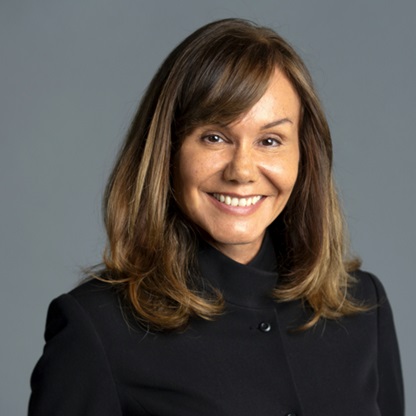
President
Patricia Buendia, Ph.D.
Patricia is a senior data scientist, software engineer, and bioinformatician with over 20 years of experience in biomedical research and software development. She founded Lifetime Omics in the USA and has consulted for BioTeam on AI/ML, omics, high-performance computing, and health informatics projects. Her work has been supported by contracts and grants from the U.S. Centers for Disease Control and Prevention and the National Institutes of Health.
She holds a Master’s degree in Computer Science from the Technical University of Munich and a PhD in Bioinformatics from Florida International University. Her expertise spans AI/ML, data integration, clinical informatics, and the analysis of high-throughput biomedical data, including NGS and multi-omics datasets. She develops computational tools and data platforms that transform complex biological and clinical data into actionable insights, bridging data generation, analysis, and clinical application.
Patricia collaborates with researchers, clinicians, and data scientists internationally, with a focus on using high-quality data and computational technologies to accelerate knowledge discovery across medicine and healthcare.
View LinkedIn Profile.
Scientific Advisors
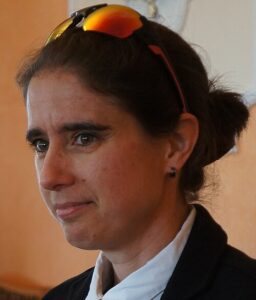
Emma Schymanski, Ph.D.
Professor Emma Schymanski leads the Environmental Cheminformatics (ECI) group at the Luxembourg Centre for Systems Biomedicine (LCSB), University of Luxembourg, where her research connects environmental exposures, complex chemical data, and the causes of disease. Her work combines cheminformatics and metabolomics to identify unknown compounds and understand their links to environmental health, with a strong emphasis on FAIR data, open science, and data interoperability. An advocate for open and reusable scientific data, she contributes to international initiatives that improve how researchers exchange data, information, and knowledge, including PubChemLite for Exposomics, FAIR-TPs, MassBank, and the NORMAN Suspect List Exchange. She holds a double degree in Chemistry and Environmental Engineering from the University of Western Australia, a PhD from UFZ Leipzig, and completed postdoctoral research at Eawag, Switzerland.
View LinkedIn Profile.
View Wikipedia Profile
View ORCID Profile.
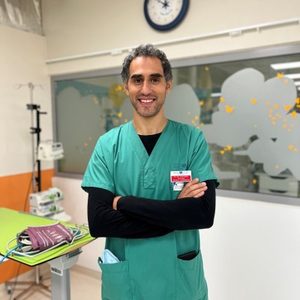
Christian de Tymowski, MCU-PH
Dr. Christian de Tymowski is Associate Professor and Hospital Practitioner (MCU-PH) at Bichat-Claude Bernard Hospital at DMU PARABOL in Paris, France, and Interim Head of the Anesthesiology and Critical Care Departments at Hôpital Louis-Mourier (AP-HP). He is also Deputy Scientific Director of the iLumens Simulation Center at Université Paris Cité. His clinical and scientific work focuses particularly on sepsis, infection, and inflammatory mechanisms. After completing a Master’s degree focused on sepsis immunology, he completed his PhD in 2020 around a central question: “Who is the killer in sepsis? Inflammation or bacterial proliferation?” His research combines basic and clinical approaches, with particular interests in sepsis, surgical-site infections following cardiac surgery, lipid metabolism during infection, and prognostic factors after lung transplantation. He is the author of numerous scientific publications.
View LinkedIn Profile.
View ResearchGate Profile.
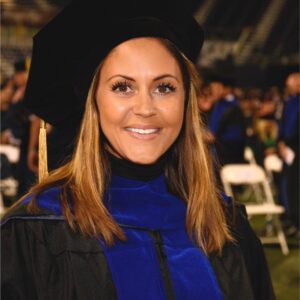
Fabiana Taglia, Ph.D.
Fabiana Taglia, Ph.D., is an Assistant Professor of Biology at Florida International University, specializing in forensic genetics, DNA sequencing, and virology. She serves as co‑principal investigator on a grant project evaluating MinION and MiSeq sequencing platforms for forensic microbial investigations. Her work integrates molecular biology, forensic chemistry, and next‑generation sequencing to advance evidence interpretation and applied forensic genomics. She attained her Master in Scienze Forensi, at Università degli Studi di Parma, italy, and her PhD in Forensic Chemistry from FIU.
View LinkedIn Profile.
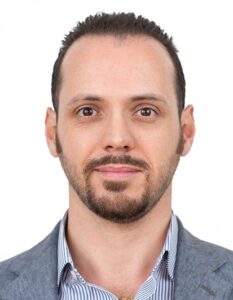
Davide Verzotto, Ph.D.
Davide Verzotto is Assistant Professor of Computer Science at the Centre for Higher Defence Studies (CASD), School of Advanced Defence Studies in Rome, where he works at the intersection of algorithms, artificial intelligence, data mining, and computational biology. His research has focused on computational methods for large-scale biological data, including protein sequence analysis, genome comparison, metagenomics, and biological pattern discovery, with applications to biomedical knowledge and life sciences.
His work also includes machine learning and health informatics, including computational analysis of biomedical data and methods for extracting knowledge from biomedical literature. He holds an M.S. in Computer Science and Engineering and a Ph.D. in Information Engineering from the University of Padova, where his doctoral research addressed advanced computational methods for massive biological sequence analysis.
View LinkedIn Profile.